
Title: Network operator view on use cases for support of AI / 6G in metro-access
Affiliation: Telefonica
Abstract: A reference framework is presented for the introduction of artificial intelligence agents in transport networks, detailing fundamental requirements to ensure scalability, security, observability, and governance in Telco networks. Additionally, a real-world use case is showcased that requires the participation of multiple agents along with a reference implementation in the Telefónica network.

Abstract: This talk presents a hyperscaler’s perspective on how AI workloads are fundamentally reshaping optical network requirements, particularly in the metro-access segment. We examine how AI-driven traffic — characterised by non-cacheable, compute-intensive, latency-sensitive, and bursty patterns — differs from traditional internet traffic and is accelerating capacity demands by an order of magnitude. We discuss the architectural evolution underway at the network edge, where the traditional CDN-centric caching model is giving way to distributed GPU compute for real-time AI inference. Key optical network innovations are explored, including pre-built metro ring architectures, 800G ZR coherent pluggables managed by switch OS, point-to-point ROADM-less designs across AI backbone and edge segments, and optical 1+1 protection for latency-symmetric AI training paths. The talk highlights how AI has created entirely new optical network segments (e.g., AI Backbone) that did not exist three years ago, and outlines the implications for next-generation metro-access network design.
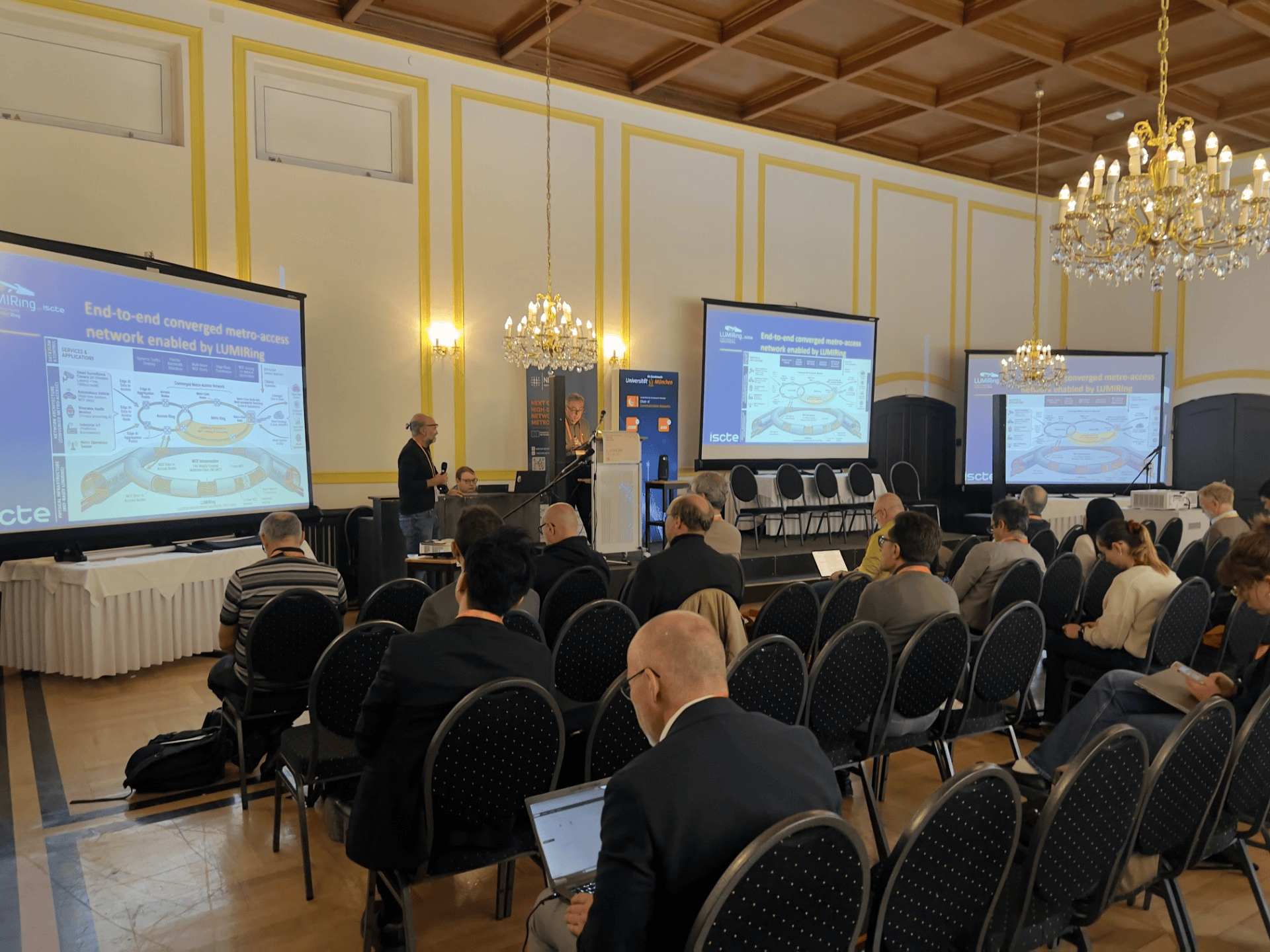
 Title: LUMIRing: a Real-World Multicore Fibre Testbed for Metro-Access Convergence in the AI and 6G Era
Affiliation: IT-IUL, Instituto de Telecomunicacoes, Iscte – Instituto Universitario de Lisboa, Portugal
Abstract: This talk presents LUMIRing, a real-world multicore fibre testbed deployed in the Lisbon metro environment to support research on converged metro-access optical networks. It highlights how the testbed enables flexible experimentation with multicore fibre, logical network separation, and scalable capacity for future AI and 6G-driven services. The talk also discusses LUMIRing’s role in validating practical, high-capacity and energy-efficient optical infrastructures under real deployment conditions.

Title: Vendor-neutral control of Point-to-Multipoint Pluggables
Affiliation: School of Advanced Studies Sant’Anna
Abstract: Point-to-multipoint (P2MP) coherent pluggable transceivers enabled by digital subcarrier multiplexing (DSCM) offer improved scalability and efficiency for future optical networks. However, their control remains largely proprietary. This work proposes a vendor-neutral control framework based on an augmentation of the OpenConfig YANG model for terminal devices, enabling standardized configuration and monitoring of DSCM-enabled P2MP pluggables.
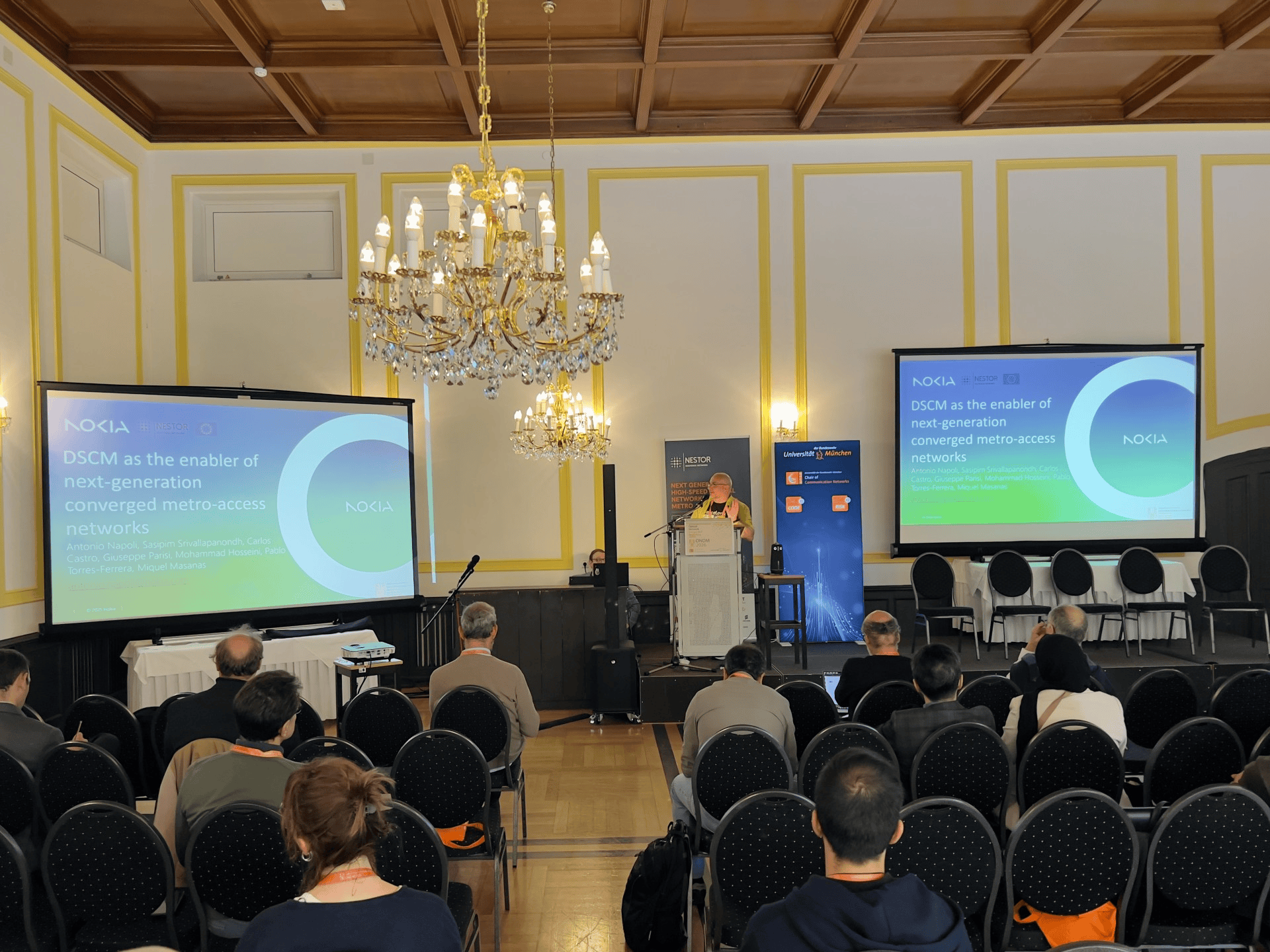
Title: DSCM as the enabler of next-generation converged metro-access networks
Affiliation: Nokia Germany
Abstract: This talk presents Digital Subcarrier Multiplexing (DSCM) as a key enabler of next-generation converged metro-access networks. It highlights how DSCM can support flexible capacity allocation, efficient use of optical resources, and scalable point-to-point and point-to-multipoint connectivity. The talk also considers the role of coherent pluggables, programmability and open SDN-based control in building more flexible and operationally efficient optical networks for future AI and 6G-driven services.